
• Skip to primary navigation
  • Skip to main content
  • Skip to footer
Great Lakes PACE of Saginaw Michigan. A Program of All-Inclusive Care for the Elderly

Great Lakes PACE

Live at home... with our help!

  • ABOUT
  • SERVICES
  • CAREGIVER RESOURCES
  • FAQ
  • UPDATES
  • JOIN OUR TEAM
Home » End of Life Care for Seniors

End of Life Care for Seniors

Palliative Care vs. Hospice Care: What’s the Difference?

Palliative Care vs Hospice Care at Great Lakes PACE

Palliative care and hospice care are often confused and families are sometimes told about one when they would benefit from understanding both. Each focuses on comfort, but they differ in timing and in how they relate to treatment.

Palliative care is specialized support for people living with a serious illness, at any stage. Its purpose is to relieve pain, symptoms, and stress. A person can receive palliative care while still receiving treatment intended to cure or slow their illness.

Hospice care is a form of end of life care for people whose doctors expect they have about six months or less to live if the illness follows its usual course. Hospice focuses entirely on comfort and quality of life, and it typically begins when a person and their family decide to stop treatments aimed at a cure.

In short:

  • Timing: Palliative care can begin at diagnosis. Hospice begins when a person is near the end of life.
  • Treatment: Palliative care can be provided alongside curative treatment. Hospice focuses on comfort rather than cure.
  • Support for families: Both offer guidance and emotional support for caregivers.

Choosing between them is a personal decision, and it is worth discussing with your loved one’s care team. Asking about palliative care early can make the later transition to hospice easier for everyone.


Filed Under: End of Life Care for Seniors

Advance Directives and Planning Ahead: What Every Family Caregiver Should Know

Advanced directives for family caregivers

If your loved one became too ill to speak for themselves tomorrow, would you know what they wanted? Many families don’t, and that uncertainty is hard on everyone. An advance directive answers those questions ahead of time, so your loved one’s voice is heard even when they can’t speak.

This guide explains the basics for Michigan families. It is general information, not legal or medical advice.

What Is an Advance Directive?

An advance directive is a legal document that records a person’s wishes for medical care and names someone to speak for them if they can no longer make decisions. In Michigan, you may also hear it called a patient advocate designation or a durable power of attorney for health care. The person named to make decisions is called the patient advocate.

Why Planning Ahead Matters

Michigan doesn’t have a law that automatically gives family members the authority to make medical decisions for a loved one. Without an advance directive, doctors typically turn to family members for guidance. If relatives disagree, a court may have to appoint a guardian, which can be slow, costly, and painful for a family already in distress.

A completed advance directive can prevent that. It removes guesswork and protects your loved one’s wishes. It also spares you from making hard decisions alone.

What Is a Patient Advocate?

A patient advocate is the person your loved one trusts to make health care decisions for them. They only step in when doctors determine that your loved one can no longer make their own decisions. Michigan requires that an advance directive be signed in front of witnesses and that the person named as patient advocate accept the role.

If you are asked to be a patient advocate, ask your loved one what matters most to them, and what treatments they would or wouldn’t want. Your job is to speak for their wishes, not your own.

Other Documents to Know About

Two other documents matter for people who are seriously ill or frail:

  • Do-Not-Resuscitate (DNR) order. Emergency medical personnel must attempt CPR when 911 is called unless a valid DNR order or MI-POST is in place. A Michigan out-of-hospital DNR order lets a person decline CPR outside a hospital.
  • MI-POST (Michigan Physician Orders for Scope of Treatment). This is an optional medical order signed by the patient or their representative and a health care professional. It records choices about CPR and other treatments for people with advanced illness or frailty, and medical staff and emergency responders can follow it.

An advance directive and these orders serve different purposes, and they work best together. A health care provider can help you decide which are right for your loved one.

How to Get Started

  1. Talk first. Have an honest conversation about your loved one’s wishes. Our guide on how to talk with your parent about their end of life wishes can help.
  2. Choose a patient advocate, and a backup in case the first person can’t serve.
  3. Complete the forms. A social worker, health care provider, or attorney can help you find the right documents and fill them out correctly.
  4. Share copies. Give copies to the patient advocate, family members, and your loved one’s doctors and care team, and keep the original somewhere easy to find.
  5. Review regularly. Wishes change. Revisit the documents after a major health change or whenever your loved one wants to update them.

Take Care of Yourself, Too

Planning for the end of life can be emotional. You may feel sadness, worry, or relief once it is done, and all of these feelings are normal. Give yourself time, and reach out to a friend, counselor, or support group if you need it.

Support From Great Lakes PACE

Great Lakes PACE care teams work with participants and families to understand their wishes and reflect them in the care plan. To learn more about how we support families, visit our end of life care page.

Filed Under: End of Life Care for Seniors

Managing Pain and Symptoms at Home: Comfort Care for Seniors

Managing pain for seniors in end of life with the help of Great Lakes PACE

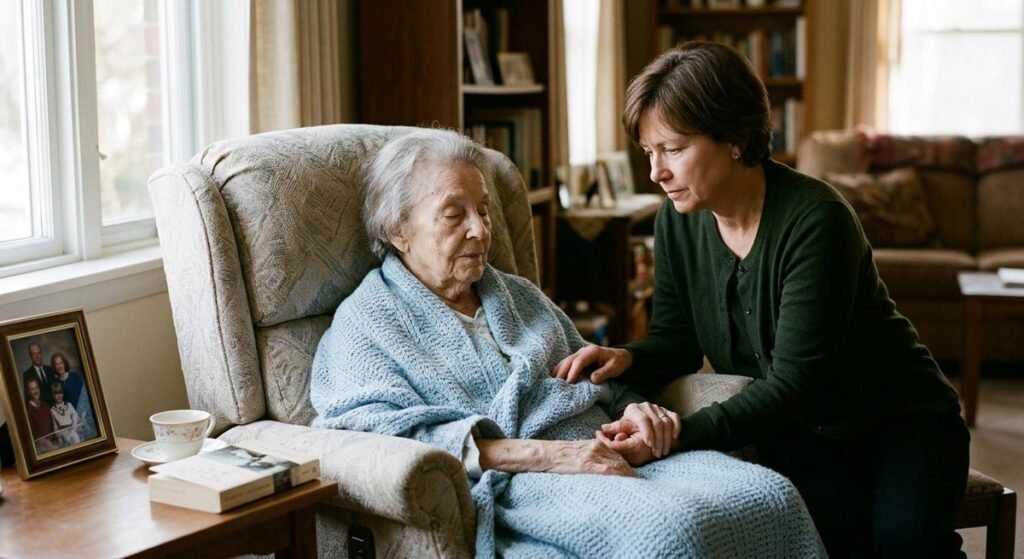
Many families want their loved one to be as comfortable as possible at home. Comfort care focuses on easing pain and other symptoms so you can rest, enjoy your days, and spend time with the people who matter to you.

Common symptoms near the end of life include:

  • Pain or discomfort
  • Shortness of breath
  • Nausea and loss of appetite
  • Fatigue and sleeping more
  • Anxiety, restlessness, or confusion

Simple steps can help. Adjust pillows and position often, keep the room quiet and comfortable, offer small sips of fluid and favorite foods if they want them, and keep familiar voices and music nearby.

Your loved one may not always say when they are hurting. Watch for groaning, grimacing, restlessness, or pulling away when touched, and report changes to their care team. Give medications only as directed, and call the care team with questions before changing anything.

Filed Under: End of Life Care for Seniors

How to Talk with Your Parent or Loved One About Their End of Life Wishes

How to talk to your parents about their end of life wishes

Talking with a parent about the end of their life is hard, and many families put it off. But these conversations give your loved one a voice in decisions that matter to them. They also spare you from guessing later, when emotions are high and time is short.

There is no perfect script. What matters is starting, listening, and coming back to the conversation over time. This guide is general information, not legal or medical advice.

Why These Conversations Matter

When a person’s wishes are known, families can make decisions with more confidence and less conflict. Your loved one is more likely to receive care that reflects what matters to them, whether that is being at home, avoiding certain treatments, or having family close by. Caregivers often say that knowing they honored a parent’s wishes brought them comfort afterward.

When to Start

The best time is before a crisis. Good openings include a new diagnosis, a hospital stay, a change in health, or the loss of a friend or relative. If none of these has happened, you can still begin. Waiting for the “right” moment often means the conversation never happens.

How to Start the Conversation

  • Choose a calm, private moment. Avoid holidays, rushed visits, and times when your loved one is tired or unwell.
  • Start with a gentle opening. You might say, “I want to make sure we honor your wishes. Can we talk about what matters most to you?”
  • Share why you’re asking. Saying “I want to be prepared to care for you the way you’d want” makes it clear this comes from love.
  • Bring it up through a story. A recent experience of a friend or relative can make the topic feel less personal.
  • Include others carefully. Siblings and other close family may need to be part of the conversation, but start one-on-one if your parent would be more comfortable.

Questions That Can Help

Open questions invite your loved one to share more than yes or no answers:

  • What matters most to you as you think about the future?
  • Where would you like to be cared for if your health declines?
  • Are there treatments you would or wouldn’t want?
  • Who do you trust to make decisions if you can’t speak for yourself?
  • Is there anything you’re worried about, or anything you’d like to be sure happens?
  • Are there people, places, or traditions you’d like to be part of this time?

Listen More Than You Talk

Your role in this conversation is mostly to listen. You may hear wishes you don’t agree with or aren’t ready for. Try not to argue or rush to fix things. Reflecting back what you hear, such as “It sounds like being at home matters a lot to you,” shows that you understand.

Your parent may also be afraid, sad, or unwilling to talk. That is normal. If they change the subject, you can say, “That’s okay. We can come back to this whenever you’re ready.” Then do.

Write Down What You Learn

Once your loved one has shared their wishes, help them put those wishes in writing. An advance directive is a legal document that records a person’s wishes for medical care and names someone to make decisions if they can’t. A social worker, health care provider, or attorney can help with the forms. Give copies to your loved one’s care team and family members so everyone has the same information.

Keep the Conversation Going

One conversation is rarely enough. Wishes can change as health and circumstances change, so check in periodically and after any major change in health. Small, repeated conversations are often easier than one big one.

Take Care of Yourself, Too

These talks can stir up grief, guilt, and fear, even when they go well. Give yourself time afterward, and lean on a friend, counselor, or support group if you need to.

Support From Great Lakes PACE

Great Lakes PACE care teams work with participants and families to understand their wishes and make sure they are reflected in the care plan. To learn more about how we support families, visit our end of life care page.

Filed Under: End of Life Care for Seniors

Signs a Loved One May Be Nearing the End of Life

Signs a loved one may be nearing end of life

Watching someone you love decline is one of the hardest parts of caregiving. Knowing what changes may happen can help you feel more prepared, and help you respond with comfort and care instead of fear.

Every person’s experience is different. Your loved one may show some of these signs and not others, and the changes can unfold over days, weeks, or longer. This guide is general information, not medical advice. Your loved one’s care team is the best source of guidance for your family’s situation.

Common Changes in the Weeks Before Death

In the weeks leading up to the end of life, many people:

  • Sleep more and have less energy, even for activities they once enjoyed
  • Eat and drink less, as the body needs less food and fluid
  • Withdraw from visitors, conversations, and favorite activities
  • Lose weight or become weaker, even when they are eating
  • Need more help with bathing, dressing, and moving around

These changes are a natural part of the process. They don’t mean your loved one is being neglected or that you aren’t doing enough.

Changes in the Final Days

As the end of life gets closer, you may notice additional signs:

  • Changes in breathing, such as pauses between breaths, faster or slower breathing, or a rattling sound
  • Cool hands and feet, and skin that looks pale, blotchy, or bluish
  • Confusion or restlessness, including talking to people who aren’t in the room
  • Less urine and changes in bowel habits
  • Unresponsiveness, or waking only briefly

Some people also have a short burst of energy or clarity, sometimes called a rally, before a further decline. It can be a precious moment to spend together, but it does not always mean they are getting better.

How to Keep Your Loved One Comfortable

You can’t stop these changes, but you can ease them:

  • Offer small sips of water or ice chips if they can swallow safely, and use lip balm or a damp swab for dry lips
  • Adjust their position gently and often, and keep bedding soft and smooth
  • Keep the room calm, with soft lighting and quiet music or familiar voices
  • Keep talking. Hearing is believed to be one of the last senses to fade, so tell them you love them and that they are not alone
  • Follow the care plan for medications and call the care team with questions before changing anything

When to Call the Care Team

Call your loved one’s care team if you notice new or worsening pain, trouble breathing, agitation that doesn’t settle, or anything that worries you. Ask ahead of time who to call, day or night, so your family has a plan. In an emergency, call 911.

Take Care of Yourself, Too

This is an exhausting and emotional time. You may feel sadness, guilt, or even relief, and sometimes all three at once. These feelings are normal. Lean on family and friends, ask for help with meals or errands, and talk with a social worker, counselor, or spiritual care provider if you can.

Support From Great Lakes PACE

Great Lakes PACE participants and their families don’t face this time alone. Our care team works with your family to manage symptoms, honor the participant’s wishes, and offer support along the way. To learn more, visit our end of life care page.

Filed Under: End of Life Care for Seniors

Footer

Great Lakes PACE Service Area

Includes portions of these counties: Arenac, Bay, Gratiot, Midland, Saginaw, Shiawassee, Tuscola. View map of service area with zip codes

CONTACT GREAT LAKES PACE
3378 Fashion Square Blvd.
Saginaw, MI 48603
Toll Free: (844) 445-7223
Phone: (989) 272-7610
TTY: 1(800) 537-7697

HOURS
Monday – Friday 8AM – 5PM

  • Facebook
  • Phone
  • YouTube
Great Lakes PACE Saginaw MI

Copyright © 2026 Great Lakes PACE · Design: ImageMatters Creative Design • H9185_website v2. Pending CMS review. Updated: 3/6/23

  • About
  • Services
  • Service Area
  • Grievances
  • Caregiver Resources
  • FAQ
  • Updates
  • Join Our Team