
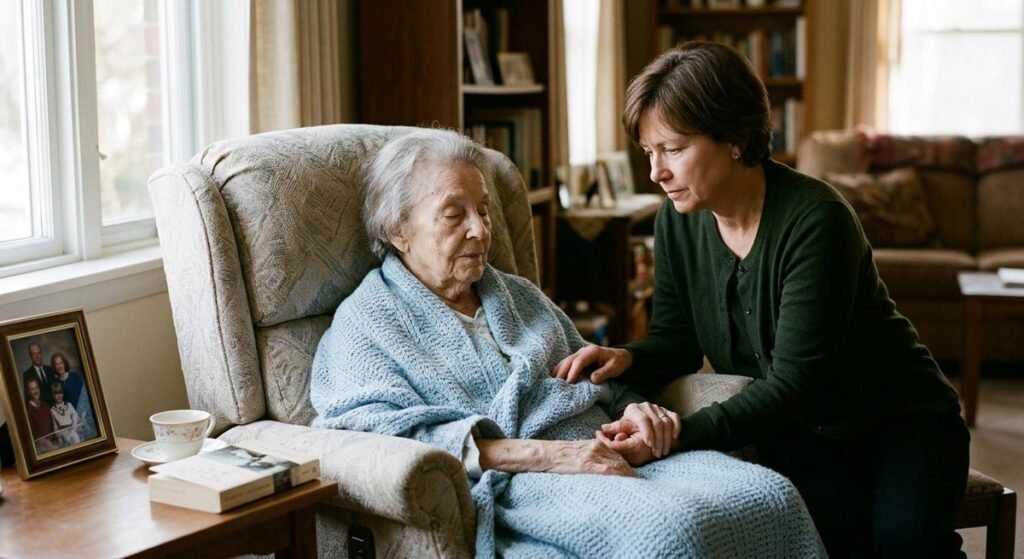
Watching someone you love decline is one of the hardest parts of caregiving. Knowing what changes may happen can help you feel more prepared, and help you respond with comfort and care instead of fear.
Every person’s experience is different. Your loved one may show some of these signs and not others, and the changes can unfold over days, weeks, or longer. This guide is general information, not medical advice. Your loved one’s care team is the best source of guidance for your family’s situation.
Common Changes in the Weeks Before Death
In the weeks leading up to the end of life, many people:
- Sleep more and have less energy, even for activities they once enjoyed
- Eat and drink less, as the body needs less food and fluid
- Withdraw from visitors, conversations, and favorite activities
- Lose weight or become weaker, even when they are eating
- Need more help with bathing, dressing, and moving around
These changes are a natural part of the process. They don’t mean your loved one is being neglected or that you aren’t doing enough.
Changes in the Final Days
As the end of life gets closer, you may notice additional signs:
- Changes in breathing, such as pauses between breaths, faster or slower breathing, or a rattling sound
- Cool hands and feet, and skin that looks pale, blotchy, or bluish
- Confusion or restlessness, including talking to people who aren’t in the room
- Less urine and changes in bowel habits
- Unresponsiveness, or waking only briefly
Some people also have a short burst of energy or clarity, sometimes called a rally, before a further decline. It can be a precious moment to spend together, but it does not always mean they are getting better.
How to Keep Your Loved One Comfortable
You can’t stop these changes, but you can ease them:
- Offer small sips of water or ice chips if they can swallow safely, and use lip balm or a damp swab for dry lips
- Adjust their position gently and often, and keep bedding soft and smooth
- Keep the room calm, with soft lighting and quiet music or familiar voices
- Keep talking. Hearing is believed to be one of the last senses to fade, so tell them you love them and that they are not alone
- Follow the care plan for medications and call the care team with questions before changing anything
When to Call the Care Team
Call your loved one’s care team if you notice new or worsening pain, trouble breathing, agitation that doesn’t settle, or anything that worries you. Ask ahead of time who to call, day or night, so your family has a plan. In an emergency, call 911.
Take Care of Yourself, Too
This is an exhausting and emotional time. You may feel sadness, guilt, or even relief, and sometimes all three at once. These feelings are normal. Lean on family and friends, ask for help with meals or errands, and talk with a social worker, counselor, or spiritual care provider if you can.
Support From Great Lakes PACE
Great Lakes PACE participants and their families don’t face this time alone. Our care team works with your family to manage symptoms, honor the participant’s wishes, and offer support along the way. To learn more, visit our end of life care page.
